
What To Look For From This Week’s Fed Meeting
How Economic Indicators Shape Mortgage Rates
As the Federal Reserve meets this week, all eyes are on potential shifts in interest rates. For those tracking mortgage rates, understanding the Fed’s decisions can offer insight into where the housing market may be headed. Here’s a quick rundown of the key economic indicators that guide the Fed’s choices and how they might impact mortgage rates.
1. The Direction of Inflation
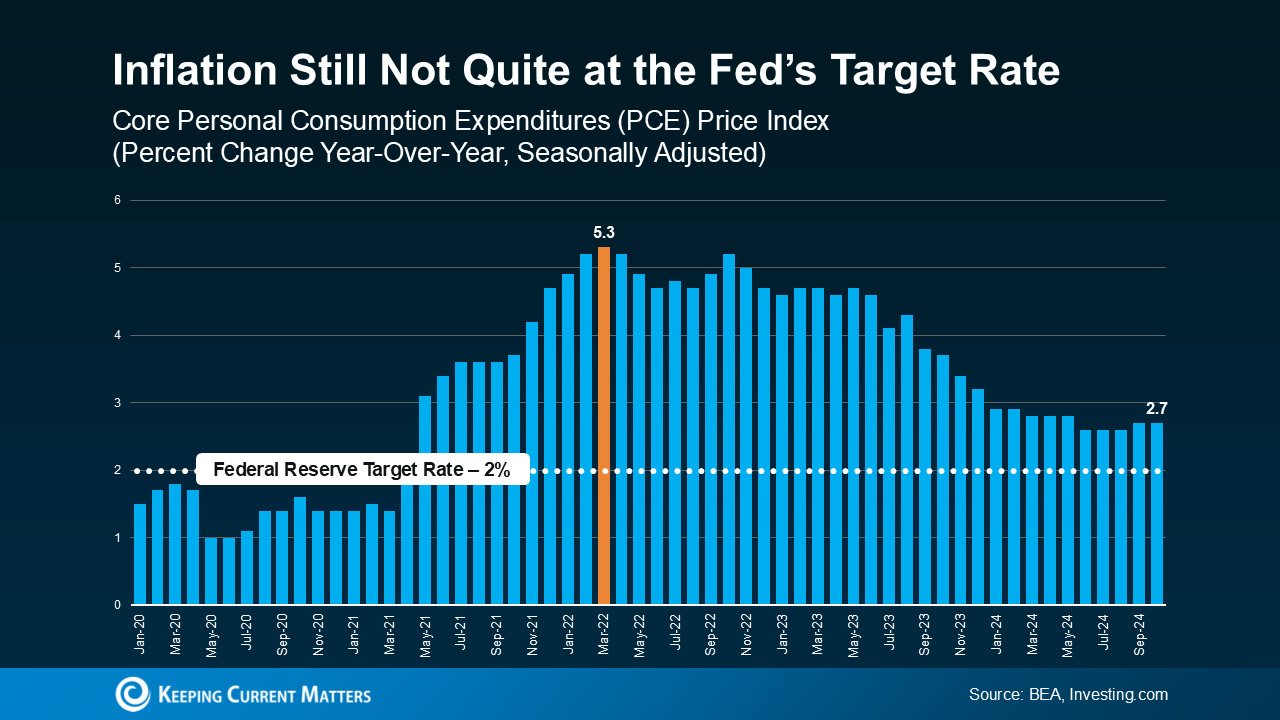
Inflation remains one of the primary concerns for the Federal Reserve. When inflation is high, the Fed typically raises rates to control it, which can lead to higher mortgage rates. As shown in the graph below, the Core Personal Consumption Expenditures (PCE) Price Index – the Fed’s preferred inflation measure – has gradually decreased from its peak but is still above the Fed’s target rate of 2%, currently sitting at 2.7%. This suggests inflation is not fully under control, meaning the Fed might maintain a cautious stance, potentially limiting interest rate cuts until inflation nears their target.
For buyers and homeowners in Pataskala, inflation impacts purchasing power. A lower inflation rate could mean lower mortgage rates, making homes more affordable. But as long as inflation remains above the target, mortgage rates may stay higher than ideal, affecting affordability in the area.
2. Job Market Health
The health of the labor market is another critical factor influencing the Fed’s decisions. When job growth is strong, the Fed is more likely to keep rates steady or raise them to prevent overheating. However, when job growth slows, the Fed may consider rate cuts to stimulate the economy. As reported by Reuters, U.S. employers added fewer jobs in October than any month since December 2020, indicating a possible cooling in the labor market.
The graph below shows that while the unemployment rate remains relatively low at 4.1%, it has been steady, reflecting a stable, though not overheated, job market. This steadiness might give the Fed more flexibility in its decisions, as they are not under immediate pressure to curb a rapidly tightening job market.
For the Pataskala housing market, a stable job market generally supports demand for housing, as employment stability boosts buyer confidence. If the job market remains steady or sees only slight fluctuations, it could support continued interest in Pataskala properties, even if rates stay relatively high.
3. The Unemployment Rate
The unemployment rate is closely watched by the Fed, as it reflects overall economic health. A low unemployment rate suggests a strong economy, while a rising rate can signal economic distress. Currently, the unemployment rate is holding steady at 4.1%, indicating a resilient job market that does not require drastic Fed intervention. However, any increase in unemployment could prompt the Fed to cut rates to stimulate growth.
In places like Pataskala, a low unemployment rate can sustain local demand for housing, as employed buyers feel more secure in purchasing homes. However, if unemployment rises, buyers may hesitate, leading to a slowdown in the housing market.
What This Means for Pataskala’s Housing Market
For buyers and sellers in Pataskala, Fed decisions on interest rates have a direct impact on housing affordability. If inflation continues its slow decline and the job market remains steady, the Fed might choose to hold rates steady or cut them modestly, which could lead to lower mortgage rates by early next year. This scenario would help make homeownership more accessible, especially in Pataskala, where the local market reflects affordability concerns.
Key Takeaway: Stay Informed and Flexible
This week’s Fed meeting will provide further clues about the direction of mortgage rates and overall economic stability. By understanding the Fed’s focus on inflation, job growth, and unemployment, Pataskala homebuyers and sellers can make more informed decisions.
For Pataskala buyers, watching for opportunities to lock in favorable mortgage rates as they fluctuate could be key. For sellers, understanding these economic indicators can help set realistic expectations for buyer demand and pricing strategies.
The Fed’s decisions may be influenced by current stability in unemployment and gradual improvements in inflation. As these indicators evolve, the Pataskala market will likely feel the effects in terms of affordability and buyer activity.